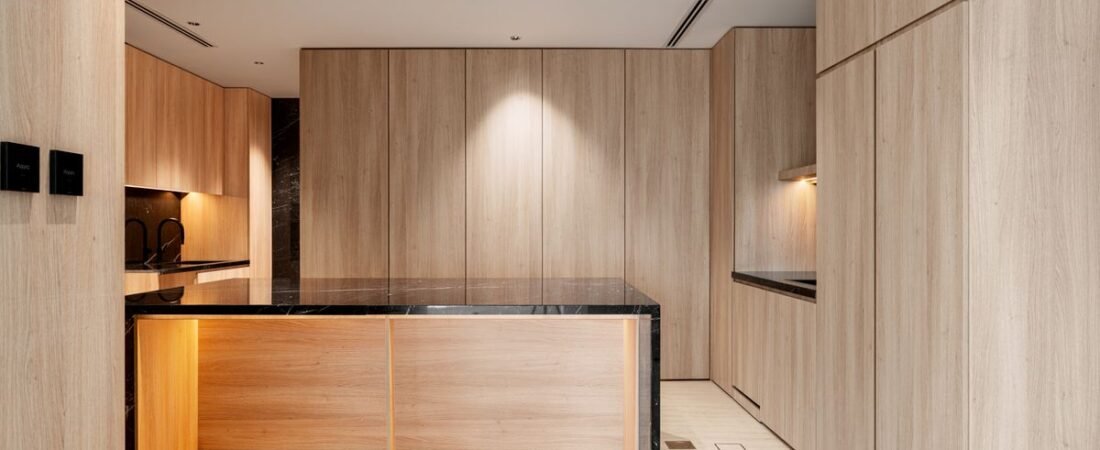
What Is Italian Kitchen Design and Why Is It Gaining Traction in Malaysia?
Italian kitchen design uses 18 mm solid-wood carcase panels, multi-coat hand lacquer or book-matched veneers, and European-engineered soft-close hardware to build modular, precision-fitted cabinetry. Malaysian demand has grown ~22% year-over-year since 2023, driven by landed homeowners in KL and Selangor seeking European craftsmanship without 14-week overseas lead times.
In Malaysia, the style is gaining momentum because landed-property buyers in prime KL and Selangor enclaves want European-grade joinery and finishes without shipping a full kitchen assembly from Turin or Vicenza. StanzoItalia specialises in importing core components and locally assembling them for tropical-climate conditions, reducing warpage and humidity-related failure rates to under 2%.
Core Principles That Separate Italian Kitchens From Mass-Produced Units
Five engineering principles distinguish genuine Italian cabinetry: solid-wood carcase (minimum 18 mm), hand-applied 5–7 coat lacquer or book-matched veneers, integrated soft-close damping on every hinge and runner, 45 mm modular grid spacing for reconfiguration, and fully recessed appliance integration that preserves clean sightlines.
- Solid-wood carcase: Birch, beech, or oak panels (18 mm minimum) replace chipboard and MDF.
- Hand-finished surfaces: Lacquer is applied in 5–7 coats; veneers are book-matched for symmetrical grain.
- Soft-close as standard: Every hinge and drawer runner includes integrated damping (Blum, Hettich, Grass).
- Modular flexibility: 45 mm grid spacing allows reconfiguration without structural changes.
- Integrated ventilation: Cooktops, hobs, and extraction are recessed to keep sightlines clean.
Italian vs. Standard Malaysian Kitchen Design: Key Differences
The core distinctions are material grade and engineering precision: Italian kitchens use 18 mm solid birch or beech versus 15 mm chipboard, multi-coat hand lacquer versus basic melamine, integrated Blum or Hettich damping versus basic cam-lock, fully recessed premium appliances versus freestanding units, and command a RM 55,000–350,000+ price band versus RM 18,000–45,000 for standard local builds.
| Feature | Standard Malaysian Kitchen | Italian Kitchen Design |
|---|---|---|
| Carcase material | 15 mm chipboard / MDF | 18 mm solid birch or beech |
| Finish | Melamine or basic lacquer | Multi-coat hand lacquer / book-matched veneer |
| Hardware | Basic cam-lock or basic soft-close | Blum / Hettich integrated damping |
| Appliance integration | Freestanding or semi-integrated | Fully recessed (Liebherr, Sub-Zero, Miele) |
| Typical lead time (local) | 4–6 weeks | 10–14 weeks (import + local assembly) |
| Price band (RM) | 18,000 – 45,000 | 55,000 – 250,000+ |
How Much Does Italian Kitchen Design Cost in Kuala Lumpur and Selangor in 2026?
A fully fitted Italian kitchen in a 120–180 m² KL or Selangor home ranges from RM 55,000 to RM 150,000 (mid-tier) and RM 150,000 to RM 350,000+ (bespoke). Final pricing depends on cabinet linear metres, stone selection, appliance integration level, and tropical-climate material upgrades specific to Malaysia’s humidity conditions.
Projects in prime areas such as Mont Kiara, Desa ParkCity, or Bukit Jalil tend to land in the upper bracket because of complex layouts and premium material specifications.
Three Common Pricing Tiers in 2026
Entry Italian kitchens (RM 55,000–90,000) feature imported hardware and single-coat finishes. Mid-range projects (RM 90,000–180,000) add multi-coat lacquer, integrated Sub-Zero or Liebherr appliances, and Calacatta quartz. Bespoke high-end builds (RM 180,000–350,000+) include Italian marble, Miele or Gaggenau ranges, and fully custom millwork.
- Entry Italian (RM 55,000 – 90,000): Imported Italian hardware, solid-wood carcase, single-coat lacquer or wood-veneer fronts, standard 60 cm quartz worktops, basic soft-close.
- Mid-Range Italian (RM 90,000 – 180,000): Multi-coat hand lacquer or book-matched veneer, integrated Sub-Zero or Liebherr appliances, Calacatta quartz or book-matched marble worktops, custom island units.
- Bespoke / High-End Italian (RM 180,000 – 350,000+): Fully custom millwork sourced through partners like Stanzo Collection, Italian marble (Carrara, Statuario), integrated Miele or Gaggenau range, bespoke lighting and wine-storage modules.
Factors That Shift Your Final Quote
Five variables drive price variance: each additional cabinet linear metre adds RM 3,200–6,500; Calacatta gold marble costs 3–4× engineered quartz; recessed appliance packages add RM 12,000–40,000; tropical humidity-sealant upgrades add 8–12% to material cost; and structural modifications for older KL properties range RM 5,000–25,000.
- Linear metres of cabinetry: Each additional metre adds roughly RM 3,200–6,500 depending on finish.
- Stone selection: Calacatta gold marble runs 3–4× the cost of engineered quartz.
- Appliance integration: Recessed ovens, warming drawers, and dishwashers add RM 12,000–40,000.
- Tropical-climate upgrades: Extra humidity-sealant coats and acclimatisation staging add 8–12% to material cost.
- Site conditions in KL/Selangor: Pre-war or strata properties may require structural modifications (RM 5,000–25,000).
What Materials Define an Authentic Italian Kitchen?
Authentic Italian kitchens combine 18 mm solid birch or beech carcase panels, multi-coat hand lacquer or book-matched natural veneers, Blum/Hettich/Grass soft-close hardware, and Calacatta, Carrara, or high-grade quartz countertops. Every component follows a 45 mm modular grid, enabling reconfiguration without structural demolition.
Cabinet Construction and Finishes
Italian cabinet construction uses 18 mm birch or beech carcase edge-banded with 1 mm PVC or ABS, fronts in 7-coat hand lacquer, book-matched walnut or oak veneer, or 12–15 mm solid-wood slabs. Internally, adjustable solid-wood shelves, push-to-open mechanisms, and 3000 K LED strip lighting are standard. Malaysian installations include a 72-hour acclimatisation period.
- Carcase: 18 mm birch or beech, edge-banded with 1 mm PVC or ABS for moisture resistance.
- Doors / Fronts: Options include 7-coat hand lacquer, book-matched walnut or oak veneer, or solid-wood slabs (12–15 mm).
- Internal fittings: Adjustable solid-wood shelves, push-to-open mechanisms, and integrated LED strip lighting (3000 K warm white).
- Climate adaptation: In Malaysia’s 80–85% average relative humidity, panels undergo a 72-hour acclimatisation period before installation to minimise expansion and contraction cycles.
Countertop and Surface Materials
Italian kitchen countertops span engineered quartz (RM 2,800–5,500/m²) for high-traffic durability, Calacatta gold marble (RM 6,500–12,000/m²) for statement islands, Carrara or Statuario marble (RM 4,000–8,500/m²) for classic European aesthetics, book-matched slate or granite (RM 3,200–7,000/m²), and Corian solid surface (RM 3,500–6,000/m²) for seamless backsplash-to-worktop transitions.
| Material | Typical Cost (RM/m²) | Best For |
|---|---|---|
| Engineered Quartz (Silestone, Caesarstone) | 2,800 – 5,500 | High-traffic family kitchens |
| Calacatta Gold Marble | 6,500 – 12,000 | Statement islands (with periodic sealant) |
| Carrara / Statuario Marble | 4,000 – 8,500 | Classic European look |
| Book-Matched Slate / Granite | 3,200 – 7,000 | Industrial-Italian hybrid styles |
| Solid Surface (Corian) | 3,500 – 6,000 | Seamless backsplash-to-worktop transitions |
Hardware and Fittings
Genuine Italian kitchens standardise Blum Clips Top or Hettich AirTech hinges at 175° opening angle with integrated soft-close, 32 kg full-extension drawer runners with push-to-open, and handle options in brushed brass, matte black steel, or handleless push-latch. Appliance fronts match cabinet finishes for a fully recessed, seamless look.
- Hinges: Blum Clips Top or Hettich AirTech, 175° opening angle, integrated soft-close.
- Drawer runners: 32 kg load capacity, full-extension, push-to-open.
- Handles: Brushed brass, matte black steel, or handleless push-latch systems.
- Appliance integration: Fully recessed ovens, warming drawers, and dishwashers with panel-to-match fronts.
How Do You Choose the Right Italian Kitchen Designer in Malaysia?
Verify that the firm sources genuine Italian or Italian-engineered components (not merely “Italian-style” melamine), provides itemised component-level specifications, offers a 2-year cabinetry plus 5-year hardware warranty, and maintains a local showroom where you can inspect lacquer depth, test hardware damping, and review completed reference projects in comparable Malaysian conditions.
StanzoItalia maintains a dedicated KL showroom with fully assembled reference kitchens so buyers can evaluate finish quality and hardware performance before committing.
Five Verification Steps Before You Sign
Before signing, request exact brand and model numbers for every hinge, runner, and panel. Inspect lacquer depth under a 1000-lumen torch for visible orange-peel texture. Obtain three local KL/Selangor references and visit one 12+ months post-install. Confirm a minimum 72-hour acclimatisation protocol and secure written warranty terms covering 2 years cabinetry and 5 years hardware.
- Ask for component-level specifications: Request the exact brand and model number of every hinge, runner, and panel. “Italian quality” without model numbers is a red flag.
- Inspect a physical sample: Check lacquer depth under a 1000-lumen torch; genuine multi-coat lacquer shows visible depth and a subtle orange-peel texture.
- Request three local references: Ask for 2–3 completed KL/Selangor projects and, if possible, visit one 12+ months post-installation to assess humidity performance.
- Confirm acclimatisation protocol: A reputable firm will state a minimum 72-hour (ideally 5–7 day) acclimatisation period for imported panels before installation.
- Review warranty terms in writing: Standard should be 2 years cabinetry, 5 years hardware, and lifetime on stone (if applicable).
Layout Considerations for Malaysian Homes
Open-plan island layouts suit Desa ParkCity and Eco Botanic (minimum 2.4 m island passage). Galley and U-shapes fit older KL landed homes at 4–6 m². Butler’s pantry plus wet kitchen configurations separate high-heat wok-frying from Italian cooking. Plan 720 mm base units, 60 mm worktop, and 900–1,200 mm wall units within typical 2.7–3.2 m Malaysian ceilings.
- Open-plan with island: Popular in Desa ParkCity and Eco Botanic; requires a minimum 2.4 m clear passage on the working side of the island.
- Galley / U-shape: Suits older KL landed homes (e.g., TTDI, Damansara Utama) where the kitchen footprint is 4–6 m².
- Butler’s pantry + wet kitchen: Common in Sentul West and Cheras landed properties; separates wok-frying (high-heat, high-oil) from Italian-style cooking.
- Ceiling height: Malaysian homes typically have 2.7–3.2 m ceilings; plan for 720 mm base units + 60 mm worktop + 900–1,200 mm wall units, leaving 400–600 mm for range hood and lighting.
Where Can You Find Italian Kitchen Design Showrooms in Kuala Lumpur and Selangor?
The primary Italian kitchen showrooms in the Klang Valley concentrate along the KL–Bukit Jalil–Puchong corridor and the North Klang Valley (Damansara–Subang Jaya) belt. StanzoItalia operates a dedicated KL showroom with fully installed reference kitchens for side-by-side finish comparison, plus a free 60-minute designer consultation and 3D concept rendering.
For clients seeking broader European home and interior pieces to complement the kitchen, the Stanzo Collection portfolio extends the design language into dining, living, and bedroom furniture with matching Italian sourcing standards.
What to Expect at a Typical Consultation (StanzoItalia Process)
A standard StanzoItalia engagement runs in five stages: laser-measured site survey (30–45 min), lifestyle and appliance briefing (20 min), photorealistic 3D concept with itemised BOQ (5–7 days), in-showroom material and hardware finalisation, and a 10–14 week production-plus-installation window ending with a 6-month post-installation inspection.
- Site measurement (30–45 min): Laser-measured plan of walls, outlets, plumbing, and structural columns.
- Lifestyle briefing (20 min): Cooking frequency, appliance shortlist, storage needs, preferred finishes.
- 3D concept presentation (5–7 days): Photorealistic render, material palette, and itemised BOQ.
- Material and hardware selection: Visit showroom to finalise lacquer shade, stone slab, and hardware finish.
- Production and installation (10–14 weeks): Import, local assembly, 72-hour acclimatisation, on-site fit-out (3–5 days), and post-installation inspection at 6 months.
Frequently Asked Questions (FAQs)
This section answers the most common buyer questions about Italian kitchen design in Malaysia: typical KL/Selangor pricing (RM 55,000–350,000+), 10–14 week installation timelines, tropical humidity compatibility, condo adaptability, the distinction between genuine and “Italian-style” kitchens, and maintenance protocols for lacquer and marble surfaces in 80–85% relative humidity.
What is the average cost of an Italian kitchen in Kuala Lumpur?
A mid-range Italian kitchen (solid-wood carcase, multi-coat lacquer, quartz worktop, integrated appliances) in a typical KL landed home costs between RM 90,000 and RM 150,000. High-end bespoke projects with natural marble and German integrated appliances range from RM 180,000 to RM 350,000+.
How long does it take to install an Italian kitchen in Malaysia?
The total timeline from design approval to handover is typically 10 to 14 weeks. This includes 6–8 weeks for import and local assembly, a 72-hour minimum acclimatisation period, and 3–5 days of on-site installation and finishing.
Is Italian kitchen design suitable for Malaysian tropical humidity?
Yes, provided the cabinetry uses solid-wood panels with proper edge-banding, a 72-hour acclimatisation protocol, and a humidity-sealant finish. Reputable firms like StanzoItalia engineer specifically for 80–85% relative humidity, keeping warpage and delamination rates under 2%.
Can I get an Italian kitchen in a condo or apartment in Selangor?
Absolutely. Italian modular systems adapt to open-plan condo layouts in areas like Sunway Velocity, Eco Botanic, and Damansara Jaya. The key constraint is ceiling height (usually 2.7–3.0 m in strata titles), which affects upper-unit dimensions and range-hood clearance.
What is the difference between “Italian-style” and genuine Italian kitchen design?
“Italian-style” typically refers to melamine or thermofoil fronts that mimic a European aesthetic at a lower price point. Genuine Italian design uses solid-wood carcase, hand-applied multi-coat lacquer or book-matched veneer, and European-engineered hardware (Blum, Hettich, Grass) with integrated soft-close damping on every component.
Where can I see Italian kitchen designs before buying in KL or Selangor?
Visit the StanzoItalia showroom in Kuala Lumpur to walk through fully assembled reference kitchens and compare finishes in person. For a wider European home-interior selection that complements the kitchen, explore the curated portfolio at Stanzo Collection.
How do I maintain an Italian lacquer or marble kitchen in Malaysia?
Wipe lacquer surfaces with a damp microfiber cloth and avoid abrasive cleaners. For marble worktops, apply a penetrating sealant every 12–18 months and wipe up acidic spills (lemon juice, wine) within 30 seconds to prevent etching; run a dehumidifier in the kitchen during monsoon season to protect the lacquer finish.