Wardrobe Design Malaysia: Complete 2026 Guide for KL & Selangor Homes
Custom wardrobe design in Malaysia has evolved beyond basic cabinetry. In 2026, homeowners in Kuala Lumpur and Selangor expect integrated storage solutions that combine Italian engineering precision, tropical-climate durability, and smart-space optimisation. This guide breaks down costs, materials, layouts, and supplier selection so you can make an informed decision before committing to a fabricator.
What Is the Average Cost of Custom Wardrobe Design in Malaysia (2026)?
Custom wardrobe design in Malaysia ranges from RM 2,500 to RM 15,000+ per unit in 2026. Melamine-finished plywood wardrobes start at RM 2,500–RM 4,500 for a standard 6-foot unit, while solid teak or imported Italian veneer systems reach RM 12,000–RM 25,000. Cost drivers include material grade, hardware brand, dimensions, and location.
Key cost drivers for your project:
- Material grade: Melamine vs. solid wood vs. Italian HPL laminate
- Hardware: Push-to-open soft-close hinges vs. premium Blum/Grassi fittings
- Dimensions: Standard 2.4 m height vs. floor-to-ceiling 3 m+ units
- Features: Integrated LED lighting, motorised lifts, anti-mould coatings
- Location premium: KL City Centre and Bangsar zones add 10–15% for logistics and tight site access
For a typical 3-bedroom condo in Ampang or Subang Jaya, a full master-bedroom wardrobe system (2.4 m × 1.2 m) with soft-close hardware and 2700 K interior LED lighting lands between RM 4,800 and RM 8,200.
What Materials Are Best for Wardrobe Design in Malaysia’s Tropical Climate?
For Malaysia’s sustained 70–90% relative humidity, marine-grade 18 mm plywood with melamine or HPL finish is the most reliable wardrobe core. Solid hardwood like teak works for visible panels but requires annual sealing. Avoid standard MDF in high-humidity zones, as it delaminates above 80% RH and fails within 2–3 monsoon cycles.
What Is the Difference Between Melamine, Plywood, and Solid Wood Wardrobes?
Melamine-finished 18 mm plywood (RM 180–RM 320/sq ft) suits 90% of Malaysian homes with 200+ colour options and warping resistance. Solid wood (RM 450–RM 1,200/sq ft) ages well but requires 72-hour acclimatisation. HPL laminate (RM 300–RM 600/sq ft) offers factory-precision scratch resistance for high-end specifications.
- Melamine-finished plywood (18 mm): RM 180–RM 320/sq ft. Resists warping, available in 200+ colour options. Best for 90% of Malaysian homes.
- Solid wood (teak, meranti, oak): RM 450–RM 1,200/sq ft. Ages well but expands and contracts with humidity shifts if not acclimatised for 72+ hours before installation.
- HPL / Italian laminate: RM 300–RM 600/sq ft. Scratch- and heat-resistant with a factory-precision finish. Widely specified in high-end KL developments such as The Troika and Eco Botanic. For a full catalogue of available laminate and veneer finishes used in Malaysian showrooms, browse the Stanzo Collection material library.
- MDF with PU coating: RM 120–RM 200/sq ft. Budget option prone to edge delamination above 80% RH. Suitable only for enclosed, climate-controlled spaces.
How Do You Plan a Custom Wardrobe Layout for a Malaysian Home?
A well-planned wardrobe follows the zone method: divide the cabinet into long-hang, short-hang, folding, drawer, and accessory zones sized to your actual garment inventory. Measure the space first (minimum 550 mm depth), audit your clothing count, then assign each zone a dedicated section before selecting hardware and finish.
- Measure the space. Note width, depth (minimum 550 mm for hanging), and ceiling height. Flag structural columns, air-conditioning pipes, and electrical outlets.
- Audit your wardrobe. Count hangers (typically 40–60 per adult), folded items, shoes (10–30 pairs), and accessories (belts, bags, jewellery).
- Assign zones. Long-hang (1,350 mm) for dresses, baju kurung, and suits; short-hang (900 mm) for shirts and blazers; drawer stacks (150–200 mm each) for undergarments and T-shirts; dedicated shoe rail or open shelf.
- Add climate controls. In Selangor and KL’s humidity, specify a 10 mm ventilation gap at the cabinet back or an integrated dehumidifier strip for fully enclosed units.
- Select hardware and finish. Choose soft-close hinges (Blum, Grassi, or Hettich), matte or satin HPL, and optional interior LED strips in 2700 K warm white.
- Finalise with your designer. A professional service like Stanzo Italia provides 3D CAD renderings before manufacturing so you approve every joint, shelf depth, and drawer pull.
What Are the Essential Wardrobe Zones Every Malaysian Home Needs?
Every Malaysian wardrobe needs six functional zones: a 1,350 mm long-hang rail for traditional clothing, a 900 mm short-hang rail, a 4–6 drawer bank, a 200 mm deep shoe section, a 500–600 mm overhead storage shelf, and a dedicated accessories rail for belts, scarves, and handbags.
- Long-hang rail: 1,350 mm clearance for traditional clothing (baju kurung, cheongsam, long gowns) and formal wear.
- Short-hang rail: 900 mm clearance for shirts, blazers, and folded-over trousers.
- Drawer bank: 4–6 drawers (150–200 mm each) for undergarments, socks, and accessories.
- Shoe section: Open shelf (200 mm deep) or tilt-out rack sized for 10–30 pairs.
- Top storage (overhead): 500–600 mm shelf for seasonal items, luggage, or infrequently used items.
- Accessories rail/hook: For belts, scarves, handbags, and watches.
What Wardrobe Design Styles Work Best for KL and Selangor Condos?
In 2026, the dominant wardrobe aesthetic in KL and Selangor condos is minimalist flat-panel with concealed push-to-open hardware in matte white, warm oak, or graphite grey. Floor-to-ceiling units (2,800–3,000 mm) maximise vertical space in standard 9.5–10 ft ceiling developments from Bangsar South to Eco Botanic.
What Are the Most Popular Wardrobe Designs in Malaysian Apartments?
The five most popular designs in 2026 are walk-in wardrobes (5 m²+, landed homes), pivot/swing-door units (2.4 m × 2.4 m, condo master suites), sliding-door systems (rooms under 10 m²), open-plus-closed hybrids (co-living/studio), and Italian-style modular HPL systems for rapid on-site assembly.
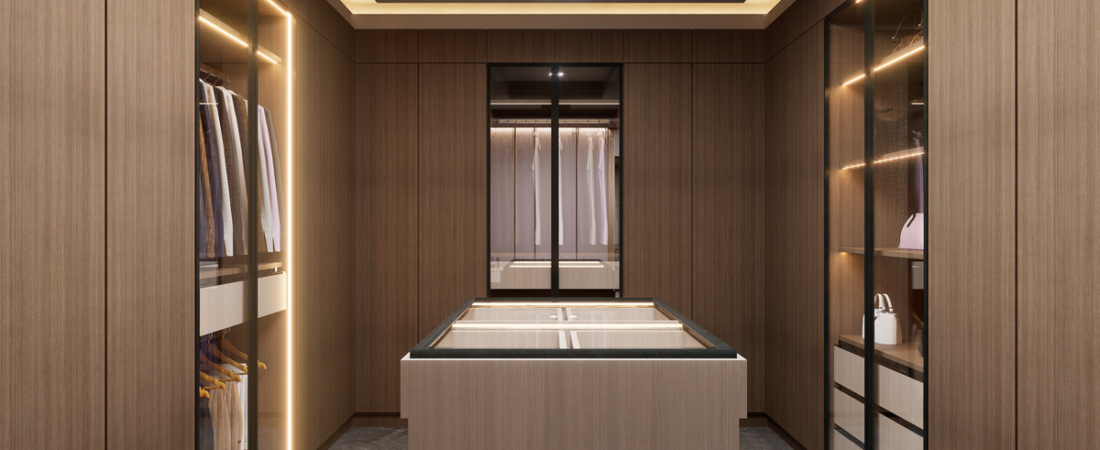
- Walk-in wardrobe (5 m²+): Full room converted to storage with island drawers, mirror panel, and integrated lighting. Common in 4-bedroom landed homes in SS2, TTDI, and Bukit Jalil.
- Pivot/swing door wardrobe (2.4 m × 2.4 m): Standard for 3-bedroom condo master suites. Two or three swing doors with full-length mirror inset.
- Sliding-door wardrobe: Space-saving for rooms under 10 m². Bypass doors on concealed aluminium tracks with soft-close dampers.
- Open + closed hybrid: Upper section open (display shelving for bags and books), lower section closed (drawers and hangers). Popular in co-living and studio units in Bangsar South and TTDI.
- Italian-style modular system: Pre-engineered HPL or veneer components designed for rapid on-site assembly. Brands in the Stanzo Italia portfolio follow this manufacturing model.
How Long Does a Custom Wardrobe Installation Take in Malaysia?
A standard custom wardrobe project in KL or Selangor takes 4 to 8 weeks from initial consultation to final handover. The manufacturing phase alone requires 15–25 days for melamine/HPL units and 25–35 days for solid wood with veneer. On-site installation adds 1–3 days per room.
Typical project timeline:
- Consultation + on-site measurement: 1–3 days
- 3D design + client approval: 5–10 days
- Manufacturing (factory): 15–25 days for melamine/HPL; 25–35 days for solid wood with veneer
- On-site installation: 1–3 days for a single room; 4–7 days for a full multi-room project
- QC walkthrough + touch-ups: 1–2 days
Delays most often occur when the site is not ready (unsealed walls, incomplete electrical points) or when the client requests mid-production changes after the factory has cut panels.
What Should You Check Before Hiring a Wardrobe Design Company in Malaysia?
Verify six criteria before committing: a recent local portfolio (three projects within 12 months), material provenance (E1/E0 plywood rating, HPL origin), hardware brand (Blum, Grassi, Hettich), minimum 1-year workmanship warranty with 5+ year hardware coverage, a fixed-price itemised quotation, and a photorealistic 3D CAD render before payment.
- Recent local portfolio: Request at least three completed projects in KL or Selangor within the last 12 months. Inspect hardware alignment, panel gaps (should be ≤ 2 mm), and finish consistency under direct light.
- Material provenance: Ask for the plywood formaldehyde rating (E1 or E0), HPL brand and country of origin, and the hardware supplier name. Reputable firms specify Blum, Grassi, or Hettich fittings.
- Warranty terms: Minimum 1 year on workmanship, 5+ years on hardware. Confirm whether the warranty covers humidity-related swelling or veneer bubbling.
- Fixed-price itemised quotation: The quote must list material, hardware, labour, delivery, and on-site finishing (sealant, paint touch-ups) separately. Avoid vague “from RM X” pricing.
- 3D design visualisation: A photorealistic CAD render before payment protects you from miscommunication about shelf heights, door orientations, and finish colours.
- After-sales support: Confirm who handles hinge adjustments, drawer slider replacements, and veneer touch-ups 1–2 years post-installation.
For an independent benchmark of premium finish standards and material grades, compare specifications on the Stanzo Collection catalogue before you sign a contract.
Frequently Asked Questions (FAQs)
How much does a custom wardrobe cost in Kuala Lumpur in 2026?
A standard 6-foot melamine wardrobe costs RM 2,500–RM 4,500, while a premium Italian-laminate or solid-wood system ranges from RM 8,000 to RM 25,000 depending on dimensions, hardware, and integrated features.
What is the best wood for wardrobes in Malaysia’s humid climate?
Marine-grade plywood (18 mm) with melamine or HPL finish is the most reliable choice. If you prefer solid wood, use teak or meranti with proper sealing and a 10 mm ventilation gap at the cabinet back to prevent warping.
How long does wardrobe installation take in Selangor?
Plan for 4 to 8 weeks from consultation to final handover, with 15–25 days spent in the factory manufacturing phase for melamine or HPL units.
Do I need a walk-in wardrobe or a built-in wardrobe for my condo?
Condo rooms under 4 m × 3 m are best served by a built-in or sliding-door wardrobe. Reserve walk-in layouts for rooms of 5 m² or larger, typically found in 4-bedroom units or landed homes.
Can I design my own wardrobe layout and have it built locally?
Yes, but you will need a structural drawing with load-bearing calculations and a licensed local fabricator. Engaging a professional service like Stanzo Italia ensures correct joinery, a 3D preview, and a post-installation warranty.
What is the difference between HPL and melamine finish for wardrobes?
HPL is a thicker, more scratch- and heat-resistant surface layer bonded under high pressure, making it ideal for high-traffic drawers and countertops. Melamine is a thinner resin-impregnated paper layer—more affordable but slightly less durable over a 10-year lifespan.